Why Thinking Is Finding Its Voice Again

When my book, Verlorene Weisheit, was placed in the Philosophy Bestseller category, I didn’t experience it so much as a personal honor, but more as a sign that philosophy is finding an audience again. Apparently, more and more people feel a growing need to think about the foundations of existence: beyond buzzwords and quick explanations.
Philosophy has never drawn its power from answers, but from questions. That was true for Plato, Kant, and Nietzsche, and it’s just as true for the voices of today. Maybe it’s no accident that the old thinkers get read again in times of great uncertainty. In a world that increasingly bets on efficiency and predictability, thinking itself becomes a place of resistance: a search for order in chaos.
I see this return to reflection as a sign of an intellectual movement. Modern philosophy can once again do what it does best today: bring people into conversation with themselves.
- Philosophy Bestseller: When Thinking Finds Resonance
- From Plato to Kant: The Historical Line of Thinkers Who Moved Society
- Philosophy Bestsellers and the Question of Universal Principles
- Between Market and Meaning: Philosophy in the Present
- Conclusion: Philosophy Bestsellers, A Sign of the Rediscovery of Thinking
- FAQ
Philosophy Bestseller: When Thinking Finds Resonance
When a book shows up among the philosophy bestsellers, that’s less an expression of fashionable popularity than a sign of a growing need for direction. Philosophy always gains importance right when a period’s familiar patterns of interpretation hit their limits. In a world shaped by acceleration, data overload, and algorithmic explanations, interest is growing in principles that reach beyond what can be immediately measured.
Philosophy books speak to an audience looking for depth. They don’t offer final answers, but they do offer the ability to ask questions anew, and in doing so, to cultivate an attitude of pausing. Philosophy isn’t consumed, it’s lived: as an attempt to understand complexity instead of simplifying it.
There’s a cultural signal in this return to thinking. The success of philosophical works points to a collective longing for meaning and connection. In times of confusion, philosophy becomes again what it originally was: a school of seeing that grasps the individual within the whole.
From Plato to Kant: The Historical Line of Thinkers Who Moved Society
Philosophy was never a closed system at any point in time: it was always a response to social and intellectual upheaval. Great thinkers got heard precisely when thinking itself had lost its balance. Their ideas formed fixed points during eras of transition: direction during phases of change.
1. Plato and the Order of Thought
With his theory of ideas, Plato laid the foundation for Western thought. Behind the visible world, he saw a spiritual structure underlying everything: philosophy and mathematics are closely connected here. In the notion that numbers and forms express what’s real, a way of thinking emerges that searches for unity and measure.
2. Kant and the Responsibility of Reason
In the Enlightenment, philosophy becomes a moral discipline. Kant’s Critique of Pure Reason shifts the center of thought into the human being itself. Knowledge doesn’t arise from imitating the world, but from ordering it in thought. With this, Kant establishes a new understanding of freedom: as the ability to submit to the laws of one’s own thinking.
3. Nietzsche and the Break with Tradition
In the 19th century, philosophy turns against its own foundations. Nietzsche calls for a return to the creative power of thought and criticizes every form of dogmatic truth. Philosophy becomes an expression of life itself: an attempt to create meaning out of experience, right where old certainties fall apart.
This development shows that philosophy always takes effect right where old systems no longer hold up. It remains a process in which new answers emerge without the old questions disappearing: an ongoing attempt to recognize universal principles through the changes of the times.
Philosophy Bestsellers and the Question of Universal Principles
The success of philosophical works today points to a need that reaches far beyond the book market. The fact that books show up among the philosophy bestsellers is less an expression of a trend than a symptom of a deeper movement. The growing confusion of the modern world of knowledge creates a desire to recognize order again: principles that give thinking something to hold onto.
Today, philosophy stands between two poles: the rational grip of science and the inner longing for meaning. It comes alive right where the two fields touch each other. Within this tension, a path opens up to the big questions of modern philosophy and its roots: what stays valid when everything seems explainable? What structure holds when systems dissolve?
In this context, the idea of universal principles forms a common thread that runs from antiquity all the way to the present. Whether with Plato, who saw in numbers the universal language of the world, or with Kant, who understood reason as the lawgiver of thought, it was always about locating the individual within the whole.
The fact that today’s philosophy books are finding broad readerships again shows that this search isn’t finished. It reflects a growing need to make the complex understandable again: not through simplification, but through structure. In this sense, every philosophy bestseller is an expression of the attempt to bring order to thinking itself.
Between Market and Meaning: Philosophy in the Present
Philosophy has a peculiar relationship with success. Its goal was never popularity, but insight. And yet it reaches a broad public precisely when it manages to put a period’s questions into words. The growing presence of philosophy books, talks, and podcasts shows that thinking itself is reclaiming a space in the cultural consciousness.
The market follows different laws. It values visibility, demand, and trends. Philosophy, by contrast, escapes these mechanisms, because it doesn’t promise answers: it cultivates the questioning itself. Its strength lies in depth, not in reach. Still, the two spheres can touch each other when content follows not calculation, but an intellectual need.
In this sense, the new attention to philosophical topics can be understood as an expression of a cultural countermovement. It pushes back against the economization of knowledge and reclaims the value of thinking itself. In an age shaped by technical feasibility, philosophy is a reminder of the measure that has to underlie all progress.
This creates a paradoxical situation: philosophy becomes more visible precisely because it escapes the visible. Its value doesn’t lie in the market, but in the thought itself: in the ability to give direction where systems fail.
Conclusion: Philosophy Bestsellers, A Sign of the Rediscovery of Thinking
The term Philosophy Bestseller describes more than a sales figure. It points to a quiet movement within the cultural consciousness: the reawakening of interest in fundamental questions. In an age where knowledge has accelerated and exchange has become superficial, the need for depth, order, and meaning is growing.
Philosophy shows that direction doesn’t come from more information, but from structure: from understanding the connections that carry thought. Whether in the systems of antiquity or in the reflection of the digital age, it remains a school of measure.
Maybe that’s where the real success lies: in books, conversations, and ideas becoming, once again, the starting point of a search that keeps the whole in view. That’s where the best philosophy books and today’s bestsellers meet at a common point: they lead back to thinking itself, to new universal principles, and to the lasting order within chaos.
FAQ
What does “Philosophy Bestseller” actually mean?
The term stands less for numbers than for resonance. It describes the growing interest in books that point beyond everyday life: works that understand thinking, once again, as a cultural practice.
Why are more people interested in philosophy again today?
In a world full of data and quick opinions, the need for depth is growing. Philosophy doesn’t offer easy solutions, but it offers direction where knowledge alone isn’t enough.
Can philosophy even become a bestseller?
Yes, when it asks questions that move a lot of people. Books that connect timeless principles with modern language reach readers, much like the best philosophy books, which work through relevance, not popularity.
What role does philosophy play in the digital age?
It reminds us of measure, responsibility, and meaning. Precisely within the tension between technology and speed, thinking becomes, once again, a form of self-assurance, and with that, a cultural necessity.
- Philosophy Bestseller: When Thinking Finds Resonance
- From Plato to Kant: The Historical Line of Thinkers Who Moved Society
- Philosophy Bestsellers and the Question of Universal Principles
- Between Market and Meaning: Philosophy in the Present
- Conclusion: Philosophy Bestsellers, A Sign of the Rediscovery of Thinking
- FAQ
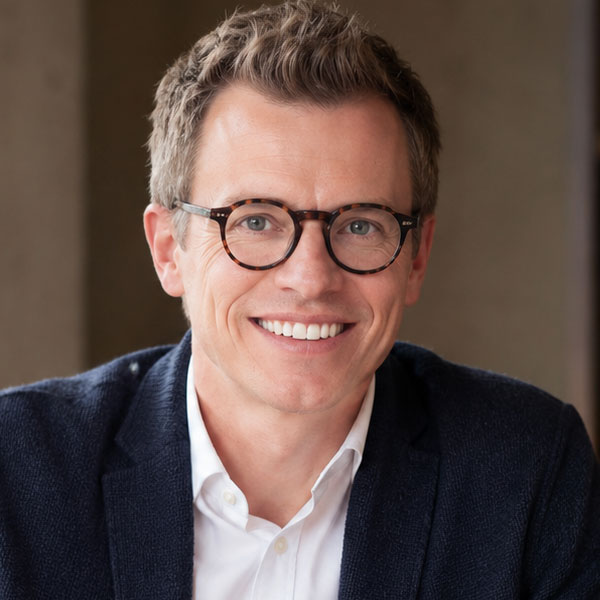
About the Author
Dr. Dr. Ruben Stelzner
A scientist, humanities scholar, entrepreneur, and philosophical author, Dr. Dr. Ruben Stelzner writes about universal principles, archetypal patterns, and the roots that science, religion, art, and culture share.
His book Verlorene Weisheit (German for "Lost Wisdom") is dedicated to the question of how timeless principle can again provide clarity and orientation today.
FOLLOW HIM
More at
rubenstelzner.com
TO THE BOOK
Verlorene Weisheit