Order in Chaos

Order in Chaos: Lost in Abundance, Why Are We Losing Our Footing?
In this flood of data, many people lose track. It’s hard to tell what matters from what doesn’t, to separate the true from the false. And it’s even harder to find a direction in all of it: what should we orient ourselves by? What’s right, what’s wrong? What still counts, and what doesn’t anymore?
Religion, tradition, and shared moral ideas used to offer clear guardrails. They answered life’s big questions, shaped shared values, and gave people meaning. Today, though, fewer and fewer people believe in these systems. At the same time, much of what once seemed unshakable has become relative. There seem to be no fixed rules left, everything is negotiable, subjective, individual. What holds true for one person doesn’t have to hold true for another. And so everyone ends up living in their own truth.
This dissolution of shared standards has consequences, not just for individuals, but for society as a whole. Without a common foundation, tensions arise. The gap between opinions and worldviews keeps growing. There’s a shortage of consensus, of shared goals, of trust. We’re more technically connected than ever, yet often more distant from one another inside than we’ve ever been. Opinions collide instead of complementing each other. Exchange turns into confrontation.
That’s how we end up with the feeling that everything is possible at once, but nothing counts anymore. A paradoxical freedom that unsettles more than it liberates. A diversity that paralyzes rather than inspires. And in the end, one central feeling remains: a loss of direction in an impenetrable jungle of information.
In a world full of possibilities, we often lack exactly what would actually move us forward: a clear path, a direction, a sense of meaning.
The World Isn’t Chaotic, It’s Highly Ordered
The feeling of standing in the middle of unmanageable chaos might feel real to many people, but it’s only one way of perceiving things. Because if you look closely, it becomes clear: our world isn’t chaotic at all. It runs according to clear, reliable rules.
In nature, we see structures, patterns, and systems everywhere: cells form organs, organs form organisms, organisms form ecosystems. Plants don’t grow randomly, they follow genetic and ecological laws. The human body runs on a complex but stable interplay of functions. Nature isn’t chaos, it’s a finely tuned organism.
The natural sciences confirm this too: the universe obeys fixed laws. Gravity acts the same way everywhere. Light travels at a constant speed. The laws of thermodynamics explain why heat doesn’t just “disappear.” And all of that holds true, whether in New York or Nairobi, today or tomorrow.
The apparent unpredictability of many events often comes down to nothing more than our limited perspective. When something is too complex to predict exactly, we call it “chance.” But even complex systems, like weather, markets, or human behavior, rest on principles, even when they escape our direct understanding.
Here’s a vivid example: a ping-pong ball thrown into a mountain stream doesn’t follow some random path. The current, the terrain, obstacles, and many other factors shape its course. You can’t calculate each of these factors exactly, but they all follow the laws of physics. The result looks chaotic, but it’s governed by rules through and through.
So here’s the central insight: chaos isn’t the opposite of order, it’s often just order’s more complex form. Order underlies a great many things, even when we can’t recognize it right away.
The Return to First Principles: An Invitation to Look Deeper
This is exactly where the book Verlorene Weisheit picks up. It invites you to lift the veil of apparent chaos and sharpen your eye for the universal structures of order that underlie everything. At the center of it all are the basic principles that recur in nature as much as in religion, philosophy, and culture, and that show up with particular clarity in one medium above all: numbers.
The book shows that numbers don’t just count, they tell stories. It opens a window into the philosophy of numbers. Numbers are the expression of a deeper order, a symbolic language we’ve forgotten how to read. Verlorene Weisheit asks whether it’s possible to arrive, through numbers, and the thinking behind them, at a deeper understanding of our world once again. It’s an invitation to tune out the noise of the world for a moment and go searching for the timeless patterns that structure our lives, and give them meaning.
FAQ: Order in Chaos
It describes the insight that even complex or confusing systems follow fixed principles. Chaos often just looks random, in reality, order underlies it.
How do I personally find order in chaos?
By recognizing patterns, reducing complexity, and focusing on core principles, whether in everyday life, work, or personal decisions.
What role does philosophy play in finding order in chaos?
Philosophy helps us understand overarching patterns and regain our bearings when old structures like religion or tradition no longer hold.
What does order in chaos have to do with numbers?
Numbers don’t just represent quantities, they embody symbols, meaning, and principles. They reveal universal structures that help us make better sense of chaos.
Image rights: iStock.com/Racide (blossom)
About the Author
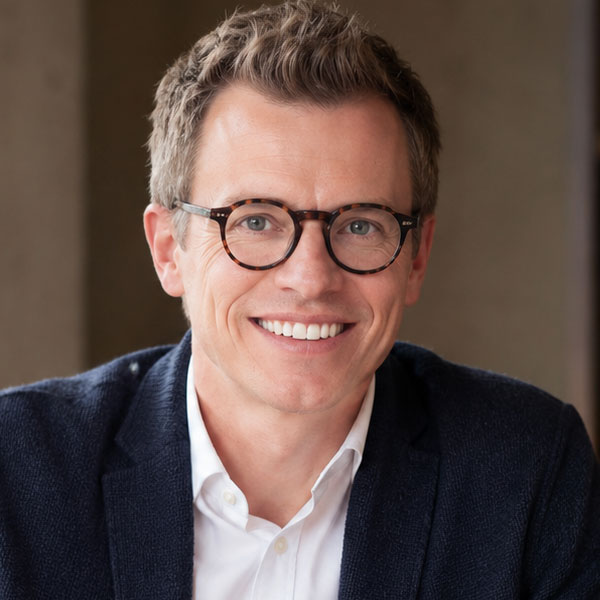
Dr. Dr. Ruben Stelzner
A scientist, humanities scholar, entrepreneur, and philosophical author, Dr. Dr. Ruben Stelzner writes about universal principles, archetypal patterns, and the roots that science, religion, art, and culture share.
His book Verlorene Weisheit (German for "Lost Wisdom") is dedicated to the question of how timeless principle can again provide clarity and orientation today.
FOLLOW HIM
More at
rubenstelzner.com
TO THE BOOK
Verlorene Weisheit