Miguel Chevalier Exhibition Munich: “Digital by Nature,” and Why His Digital Art Moves Us So Deeply

Digital by Nature: The Art of Miguel Chevalier, September 12, 2025, to March 1, 2026, Kunsthalle Munich
© Miguel Chevalier, VG Bild-Kunst, Bonn 2025, Photo: Robert Haas
- More Than Colorful Digital Effects: Why “Digital by Nature” Captivates
- Universal Principles in Digital Form
- From the One to the Many: The Principle of Growth in the Miguel Chevalier Exhibition in Munich
- Fractal Harmony: The Golden Ratio
- Chevalier and the Digital Translation of the Eternal
- FAQ on the Miguel Chevalier Exhibition in Munich
More Than Colorful Digital Effects
At first glance, the exhibition is overwhelming: monumental projections, a flood of images, glowing colors, and constantly shifting patterns wrap around the room and pull us in without fail. You no longer stand in front of an image, you stand inside it, and that’s exactly what makes the exhibition’s real subject tangible: the pervasive digitalization and rapid rise of AI that we can barely escape in everyday life. In “Digital by Nature,” we don’t just become viewers, we become part of the whole: the worlds of image and light are in constant motion, responding to our presence, making it tangible that we ourselves are part of the digital dynamic of our time.
But the fascination the show holds for adults and children alike can’t be explained by “digitalization plus colorful effects” alone. Visitors are captivated by the aesthetic forms themselves, by the way they emerge, evolve, and grow into vast, overwhelming structures. Digital plants, forests, crystal-like formations, and highly symmetrical geometric bodies take shape. Despite the most advanced digital algorithms, the processing power of the latest chips, and sophisticated graphics technology, these forms don’t feel unfamiliar or foreign at all, but come across as deeply harmonious, aesthetically pleasing, and in a sense, familiar. They express something recognizable, something timeless and infinite. The works make something visible that runs deeper: they reveal universal principles that govern nature, life, and development. Visitors feel drawn in because they’re looking at something they already know.

Source: Miguel Chevalier, Meta-Nature AI, since 2023, generative and interactive installation, software: Claude Micheli, Antoine Villeret, installation view: Jeonnam Museum of Art, Gwangyang (South Korea), 2024. (c) Miguel Chevalier, VG Bild-Kunst, Bonn 2025, Photo: Thomas Granovsky
Universal Principles in Digital Form
What are these universal principles that the Miguel Chevalier exhibition in Munich makes visible? Why do we sense that this is about something more than beauty, something that feels “right”? Chevalier draws on nature’s timeless principles of development. At the center of it all is an archetypal pattern: the principle of growth, which the artist essentially extracts and restages within his digital algorithms. What we recognize unconsciously as viewers is something that surrounds us every day: the principle of growth and development. A universal principle.
In nature, growth isn’t a random process, it follows fixed, ever-recurring laws. You could call it a primal principle of growth: Plato would probably call it an “idea” of growth. Looked at abstractly, growth means the development from the singular to the many. We see this everywhere: in a human being’s development from egg cell to full organism, in a seed’s growth into a tree, or in a population’s emergence from individual members. The physicist Geoffrey West has shown that growth, he calls it scaling, follows nearly the same patterns almost everywhere. What’s striking is that this holds true not just for living organisms, but equally for crystals, cities, and companies. Growth keeps following similarly deep structures again and again. So it’s not enough to describe growth as simply a process where a single thing becomes “many”: that multiplication follows recurring, universal patterns.
From the One to the Many: The Principle of Growth in the Miguel Chevalier Exhibition in Munich
Here’s the crucial point: growth doesn’t happen through the random addition of new parts, it follows one consistent, recurring principle: every new part follows the structure of the one before it. The information of the one carries forward into the many. The new part isn’t something completely arbitrary, that wouldn’t be growth at all, it’s something further developed that stays connected to its origin and to the whole.

Source: iStock.com/Queserasera99 (Romanesco broccoli)
This is how cells from a particular organ, the heart, for instance, become new heart cells. They take on a new position and perhaps a slightly different function, but they stay part of the heart and work together with the other cells toward a shared goal: a functioning heart. Companies work in a similar way: new employees work in a particular department, with their own individual task and place, yet they remain part of the same organization and work toward a shared purpose. That’s the principle of growth, at least when it comes to healthy growth.
But we also know the principle of unhealthy growth. When, to stick with the organ example, certain cells break away, fail to take their place or fulfill their function, and instead multiply independently of the whole and spread through the body, we call that cancer. Growth like this, growth that doesn’t serve the whole, sooner or later leads to the destruction of the entire organism. You can observe the same phenomenon in populations or companies: when more and more individuals stop acting in the interest of the whole, the whole itself risks going under, taking all its parts down with it.
Fractal Harmony: The Golden Ratio
This primal principle of (healthy) growth, and the fractals connected to it, is closely tied to a phenomenon that has occupied humanity for thousands of years: the golden ratio. It describes a particular way of dividing a line: if you divide a line so that the larger part relates to the whole the same way the smaller part relates to the larger part, that’s called the golden ratio. Proportions in this ratio have always been perceived as especially beautiful and harmonious.
The ancient Greeks already noticed this principle, and used the golden ratio in countless works of art, statues, and temples. Many of these works are still famous today and stand as the epitome of beauty, the Parthenon in Athens, Polykleitos’s Doryphoros, or the Venus de Milo, among them. Today we know, thanks not least to modern fractal research, that the golden ratio isn’t just an aesthetic game, it’s a fundamental ordering principle of nature. You find corresponding structures everywhere, from the growth of plants to the structure of our DNA to vast cosmic structures like galaxies.

Source: iStock.com/Racide (sunflower), canva.com/dariolopresti (snail shell), iStock.com/Trifonov_Evgeniy (galaxy)

This fractal primal principle of growth isn’t just beautiful, it’s universal and timeless. Numerous ancient wisdom traditions already describe it, the Bible among them, in its account of how the world came to be:
Quote (einfuegen): In the beginning was the Word, and the Word was with God, and the Word was God. The same was in the beginning with God. All things were made by him, and without him was not any thing made that was made. (Joh 1,1)
Chevalier and the Digital Translation of the Eternal
These are exactly the principles Chevalier draws on. He takes up the eternal principle of growth and translates it into the world of the digital. Viewers are captivated, not just because they’re pulled into the digitalization shaping our world right now, but because they unconsciously experience an eternal, foundational principle of our world. Chevalier shows that beauty grows precisely where the new develops into a whole in harmony with its origin. That’s the quiet, hidden message of his art. In that sense, Chevalier is a brilliant artist, because he does exactly what art is meant to do at its core: point, through contemporary, novel means, toward what endures, what’s right, and what matters most in our lives.
FAQ on the Miguel Chevalier Exhibition in Munich
What is the Miguel Chevalier exhibition in Munich about?
“Digital by Nature” presents digital art installations that make natural laws like growth, fractals, and the golden ratio visually experienceable.
Where does the “Digital by Nature” exhibition take place?
The exhibition is on view at the Kunsthalle Munich.
What makes Miguel Chevalier’s art special?
Miguel Chevalier combines modern technologies like algorithms, projections, and AI with universal principles of nature. His works are often interactive and respond to visitors.
Who is the exhibition suited for?
The exhibition appeals to adults and children alike, especially visitors interested in digital art, natural science, design, and philosophy.
Is the exhibition worth visiting?
Yes. The exhibition offers more than visual effects, it delivers real depth. It brings together art, science, and nature in an impressive way.
Is “Digital by Nature” a classic art exhibition?
No. It’s an immersive exhibition where visitors become part of the digital image spaces.
- More Than Colorful Digital Effects: Why “Digital by Nature” Captivates
- Universal Principles in Digital Form
- From the One to the Many: The Principle of Growth in the Miguel Chevalier Exhibition in Munich
- Fractal Harmony: The Golden Ratio
- Chevalier and the Digital Translation of the Eternal
- FAQ on the Miguel Chevalier Exhibition in Munich
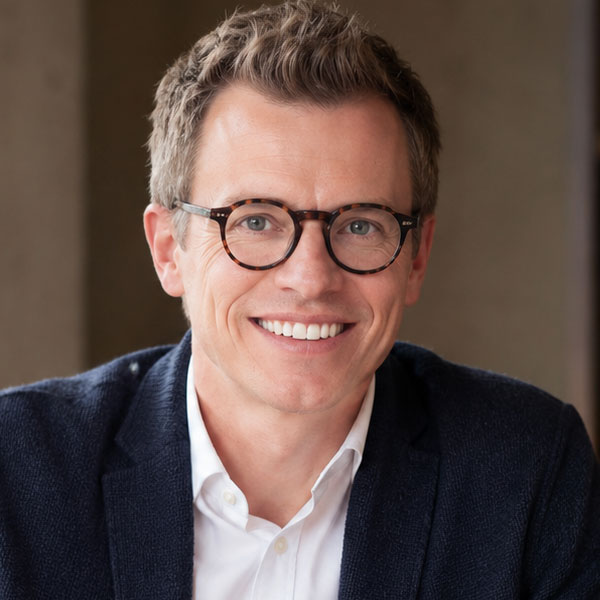
About the Author
Dr. Dr. Ruben Stelzner
A scientist, humanities scholar, entrepreneur, and philosophical author, Dr. Dr. Ruben Stelzner writes about universal principles, archetypal patterns, and the roots that science, religion, art, and culture share.
His book Verlorene Weisheit (German for "Lost Wisdom") is dedicated to the question of how timeless principle can again provide clarity and orientation today.
FOLLOW HIM
More at
rubenstelzner.com
TO THE BOOK
Verlorene Weisheit